








- 1. Understanding Indochine Architecture: A Legacy of Cultural Fusion
- 1.1. Historical Context and Origins
- 1.2. Defining Characteristics and Key Elements
- 2. The Art of Indochine Architecture in Restaurant Design
- 3. Moca Dining: A Contemporary Homage to Indochine Grandeur
- 3.1. Architectural Philosophy and Design Execution at Moca Dining
- 3.2. The Moca Dining Experience: Where Architecture Meets Gastronomy
The allure of Indochine Architecture Restaurant design is timeless—a captivating dialogue between Eastern mystique and Western grandeur, most elegantly expressed in fine dining. More than aesthetics, this cultural fusion is a narrative woven into every detail of the space. This article explores the historical roots and defining features of Indochine architecture and highlights how Moca Dining exemplifies this sophisticated style, creating an unparalleled gastronomic and sensory journey for discerning guests.
1. Understanding Indochine Architecture: A Legacy of Cultural Fusion
To truly appreciate the ambiance of an Indochine Architecture Restaurant, one must first understand its soul. It is a style born not of a single vision, but of the confluence of cultures, a testament to a period of profound historical exchange.
1.1. Historical Context and Origins
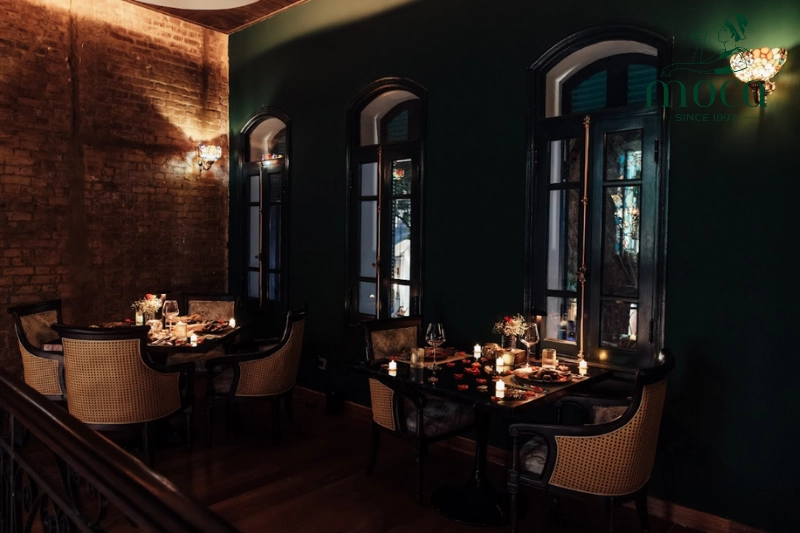
Indochine architecture: Where French elegance meets Vietnamese charm, creating spaces that are both sophisticated and culturally rooted.
The genesis of Indochine architecture was a direct outcome of the French colonial presence in Southeast Asia, primarily across Vietnam, Cambodia, and Laos, from the late 19th to the mid-20th century. It was an era of synthesis, where French architects and planners integrated the grand principles of neoclassical elements and, later, the sleek geometry of Art Deco, with the time-honored building techniques and Southeast Asian aesthetics of the region.
This fusion was not merely decorative but also practical, adapting European forms to a tropical climate. What began with imposing public buildings and government offices gradually evolved, influencing private villas, townhouses, and eventually, refined commercial spaces like ours.
1.2. Defining Characteristics and Key Elements
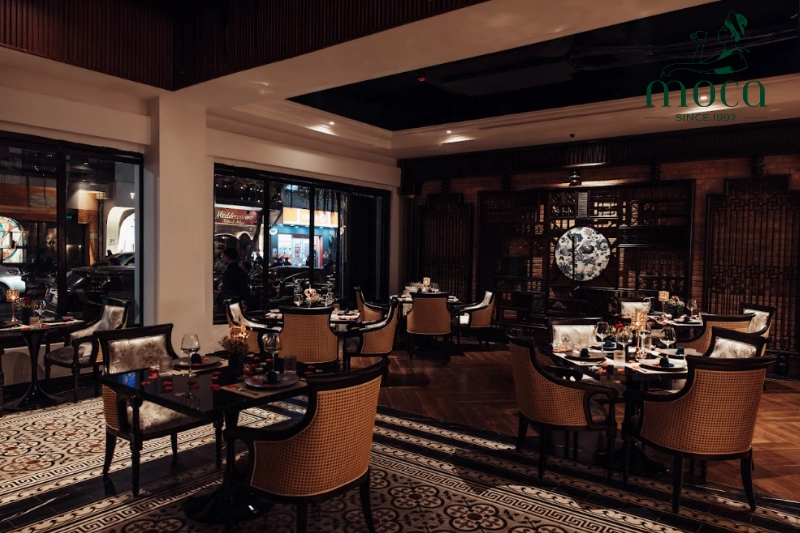
Indochine architecture: A refined blend of dark wood, patterned tiles, and natural light, creating spaces that are elegant yet in harmony with nature.
The Indochine style is recognized by a collection of distinct and harmonious features that prioritize elegance, comfort, and a connection to the natural world.
- Architectural Features: A hallmark of the style is its symmetrical layouts, which impart a sense of order and grandeur. High ceilings and wide verandas are not just aesthetically pleasing but are crucial for promoting airflow. Natural ventilation is masterfully achieved through louvered doors and windows (cửa lá sách), allowing for cooling breezes while protecting from sun and rain.
- Materials: There is a profound respect for local, natural materials. The structure often relies on rich, dark hardwoods like teak and ironwood. Floors come alive with terracotta tiles or, most iconically, the intricate 'gạch bông'—handcrafted cement tiles with vibrant geometric and floral patterns that are a signature of the era. Accents of wrought iron in balustrades and window grilles add a touch of delicate, European-inspired ornamentation.
- Decorative Motifs: The style is rich with decorative motifs that tell a story of cultural dialogue. One might find traditional Vietnamese carvings of lotus flowers, dragons, and phoenixes alongside classical French cornices and balustrades. The geometric patterns characteristic of the Art Deco movement are also frequently integrated, creating a layered visual narrative.
- Color Palette: The palette is often a sophisticated blend of earthy tones, creamy whites, and colonial pastels like pale yellow and mint green. These soft backgrounds provide a perfect contrast for the dark, polished wood furniture and vibrant decorative tiles.
- Integration with Nature: A key philosophy is the blurring of lines between indoors and outdoors. Lush courtyard gardens, tranquil water features, and large, open doorways ensure that nature is not just a view, but an integral part of the environment. A prime example of local influence is the spirit of the traditional Vietnamese 'nhà rường' (a house built on a framework of pillars and beams), which inspires the open, airy layouts and the prominence of structural dark wood.
2. The Art of Indochine Architecture in Restaurant Design

The art of Indochine architecture in restaurant design: From grand entrances to tranquil courtyards, every detail elevates dining into a refined, culturally rich experience.
Understanding the components of the style is one thing; appreciating how they elevate the fine dining experience is another. The choice of an Indochine setting is a deliberate one, designed to transport and enchant.
This architectural style creates a unique ambiance of nostalgia, elegance, and cultural immersion that transcends a typical dining setting. It is a historical ambiance that encourages guests to slow down and savor the moment. The experience becomes a sensory journey; the sight of intricate carvings, the feel of cool tiles underfoot, the sound of a fountain in a quiet courtyard—all contribute to a state of relaxed sophistication. Through this luxury restaurant design, every meal is framed by a story of heritage and refined taste.
Translating this grand architectural style into a functional and atmospheric restaurant requires masterful attention to detail.
- Grand Entrances and Façades: The experience begins before one even steps inside. An inviting veranda with comfortable seating, ornate doorways, and a thoughtfully lit pathway immediately sets a tone of welcome and exclusivity.
- Spacious Interiors: High ceilings and open-plan layouts create a sense of breathability and grandeur. These spaces are often cleverly divided into distinct zones—a vibrant bar, a serene main dining hall, and intimate private rooms—using elements like carved wooden screens or changes in floor level.
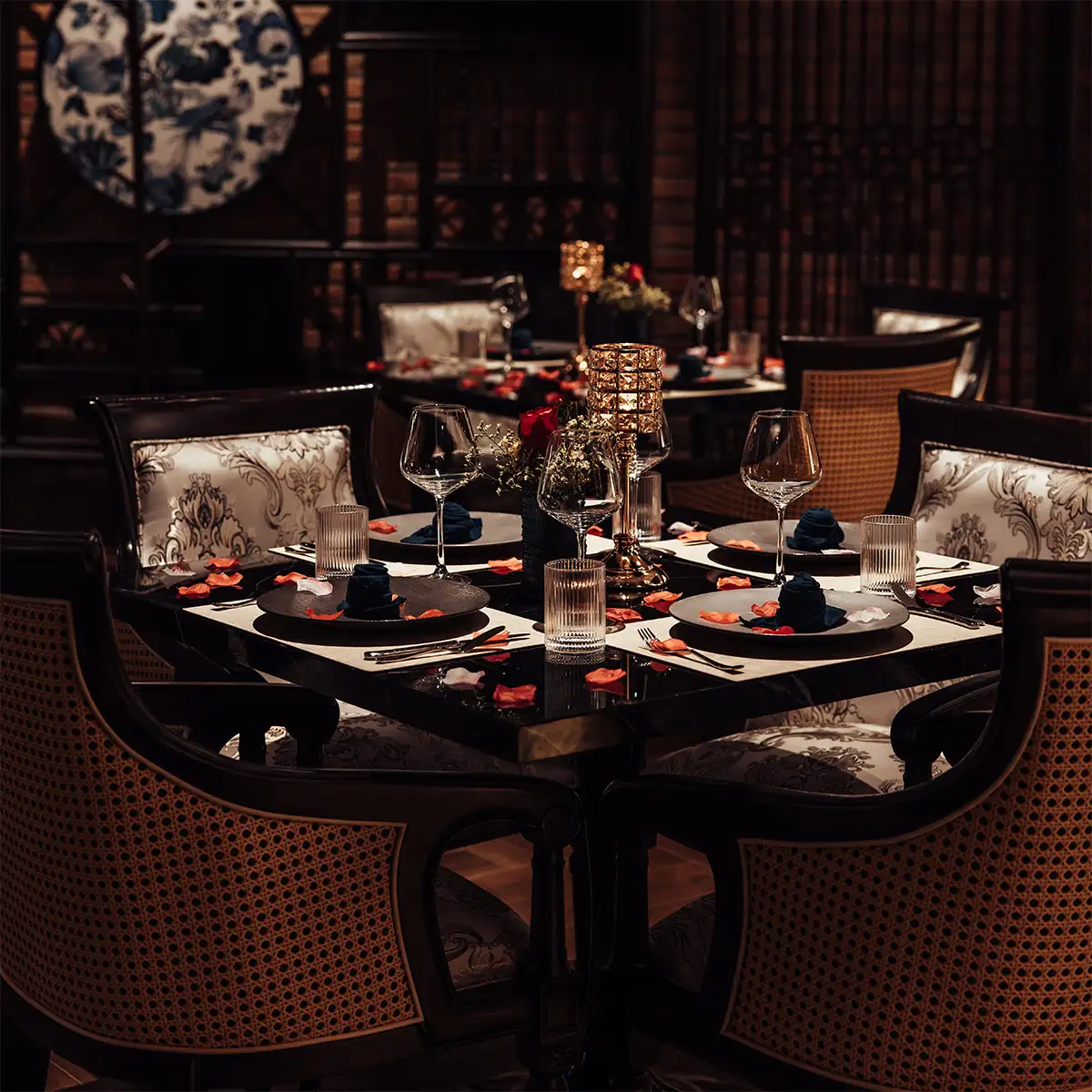
- Furniture and Furnishings: The furniture is central to the aesthetic. Expect to see dark, heavy wooden tables and chairs, often with rattan or cane accents. Upholstery in rich materials like raw silk or velvet, antique cabinets, and colonial-era artifacts further deepen the sense of authenticity.
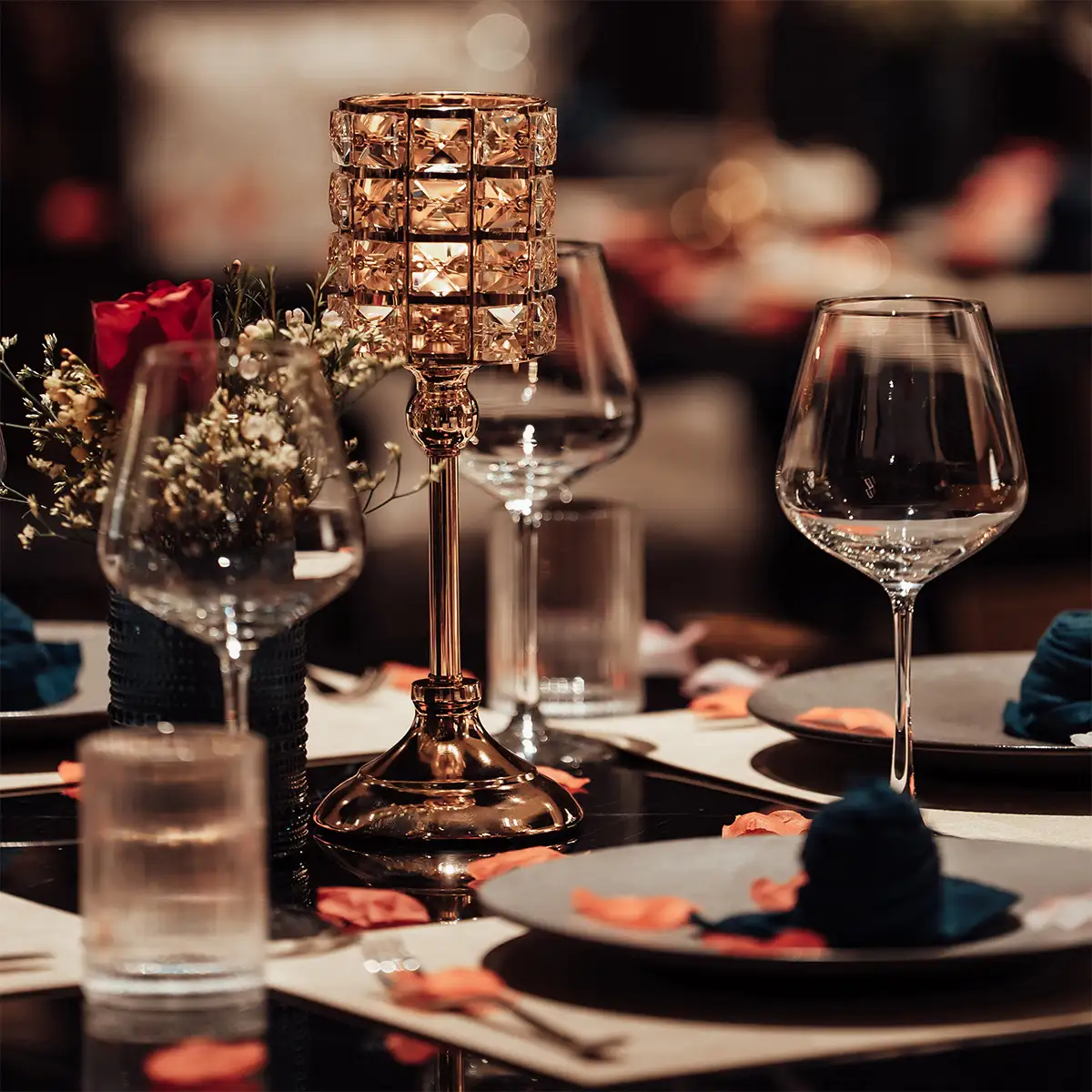
- Lighting: Lighting is never harsh. It is soft, warm, and atmospheric, achieved through a combination of traditional silk lanterns, ornate chandeliers, and an abundance of natural light during the day.
- Landscaping and Water Features: Courtyards filled with lush tropical plants like palms and banana leaves, along with the gentle sound of water, create tranquil oases that offer a respite from the bustling city outside. For instance, the strategic use of louvered shutters not only provides ventilation but also casts dramatic, linear shadows that shift throughout the day, creating a dynamic and visually engaging atmosphere that is both beautiful and functional.
3. Moca Dining: A Contemporary Homage to Indochine Grandeur
At Moca Dining, we have not simply replicated a historical style; we have embraced its philosophy and reinterpreted it for the modern connoisseur, creating a definitive Vietnamese architectural dining destination.
3.1. Architectural Philosophy and Design Execution at Moca Dining
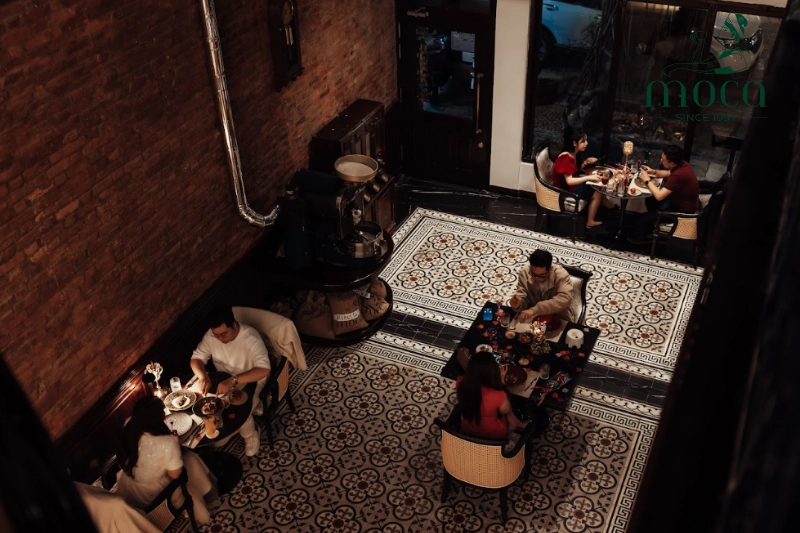
Moca Dining: Where Indochine artistry meets fine dining, from vintage tiles to handcrafted silk lanterns, every detail tells a story of heritage.
Our vision was to create a space that pays homage to the golden age of Indochine design while offering the comforts and sophistication of a contemporary fine dining establishment. This philosophy is evident in every facet of the Moca Dining design.
Upon arrival, guests are greeted by a perfectly symmetrical façade and a sweeping veranda, but the true artistry is revealed in the details. The hand-carved teak screens, depicting serene lotus ponds, that create intimate dining alcoves; the floor of our main hall, laid with original 'gạch bông' tiles salvaged from a 1920s Saigon villa; and the bespoke silk lanterns, sourced from the artisan workshops of Hoi An, which cast a warm, inviting glow over every table. Our commitment to craftsmanship is unwavering, from the intricate wrought iron detailing on our balconies to the luxurious, locally sourced fabrics that adorn our seating. This is not just an Art Deco restaurant interior; it is a living gallery of heritage and artistry.
3.2. The Moca Dining Experience: Where Architecture Meets Gastronomy
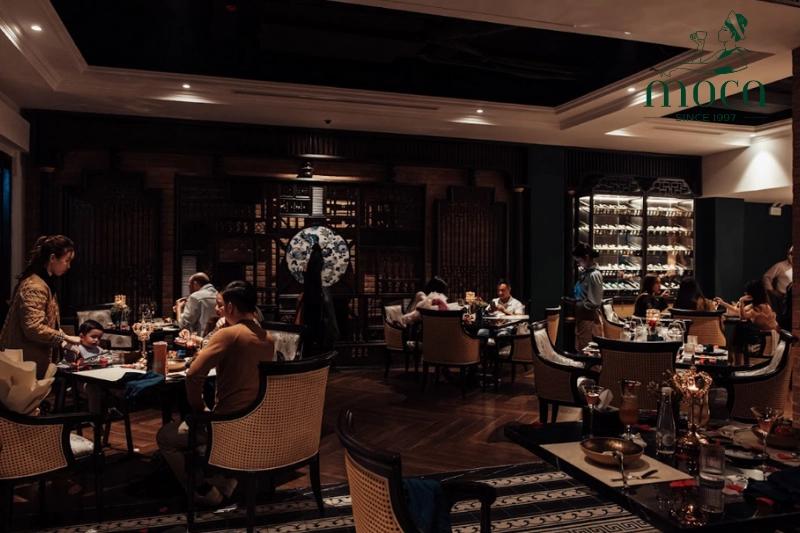
The Moca Dining experience: Where Indochine architecture meets refined cuisine, turning every meal into a serene and memorable journey.
The result of this meticulous design is an atmosphere that is at once sophisticated, tranquil, and deeply immersive. This is the essence of an Indochine Architecture Restaurant: a place where every element works in concert to create a holistic experience.
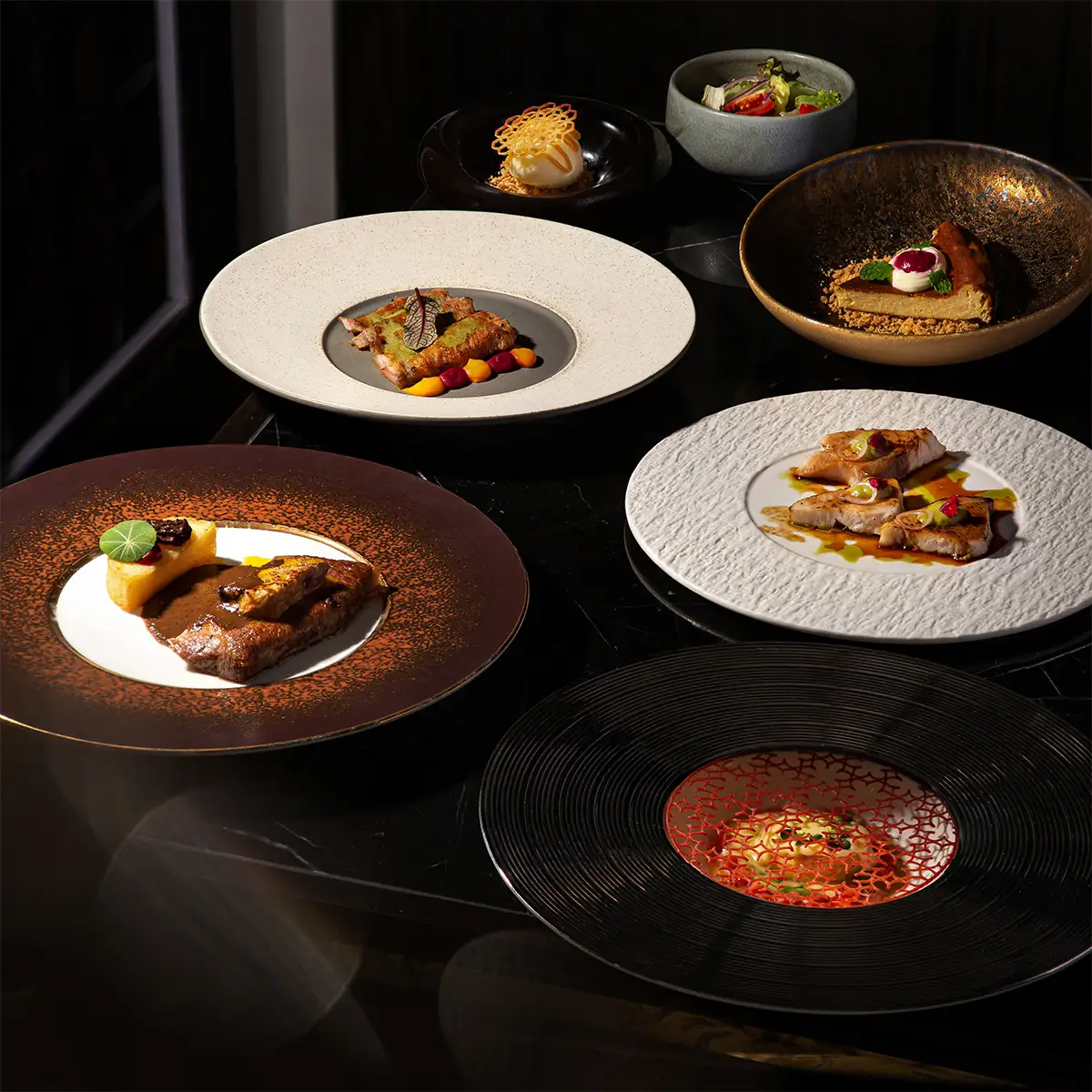
The architectural setting is the perfect counterpart to our culinary philosophy. Just as our design blends French elegance with Vietnamese tradition, our menu presents classic local flavors reimagined with modern European techniques. The synergy is palpable. Our esteemed guests often remark that dining within our courtyard feels like a tranquil escape from the modern world, a moment suspended in time. The grandeur of the main dining hall, with its soaring ceiling and elegant chandeliers, is frequently cited as transforming a meal into a truly special and memorable occasion, enhancing the overall perception of their gastronomic journey.
In conclusion, the Indochine style dining concept represents more than a design trend; it is a celebration of cultural history, craftsmanship, and atmospheric elegance. At Moca Dining, we have dedicated ourselves to not only preserving this precious architectural heritage but elevating it, offering our guests a unique and unforgettable synthesis of history, culture, and culinary excellence. We invite you to immerse yourself in the unparalleled experience of a true Indochine Architecture Restaurant at Moca Dining, where every detail tells a story and every meal is a journey through time.