






- 1. Traditional pillars: The foundation of Vietnamese dessert culture
- 1.1. Chè: The quintessential Vietnamese sweet soup
- 1.2. Bánh: The art of Vietnamese cakes and pastries
- 1.3. Tropical fruit delights
- 2. The Fine dining evolution: Reimagining Vietnamese desserts
- 3. Pairing and presentation: The complete dessert experience
When the global culinary spotlight shines on Vietnam, it often highlights Phở and Bánh Mì, while the rich world of dessert Vietnam remains less known. Vietnamese desserts, like Chè and Bánh, are defined by a delicate balance of flavors, fresh local ingredients such as coconut, tropical fruits, and beans, and varied textures. These sweets are deeply woven into daily life, marking joy, rituals, and comfort. Today, this heritage is evolving as street desserts gain sophistication, led by places like Moca Dining, which is redefining dessert Vietnam in haute cuisine.
1. Traditional pillars: The foundation of Vietnamese dessert culture
To appreciate the modern evolution of dessert Vietnam, one must first understand their foundational pillars. These are the timeless recipes and concepts passed down through generations.
1.1. Chè: The quintessential Vietnamese sweet soup
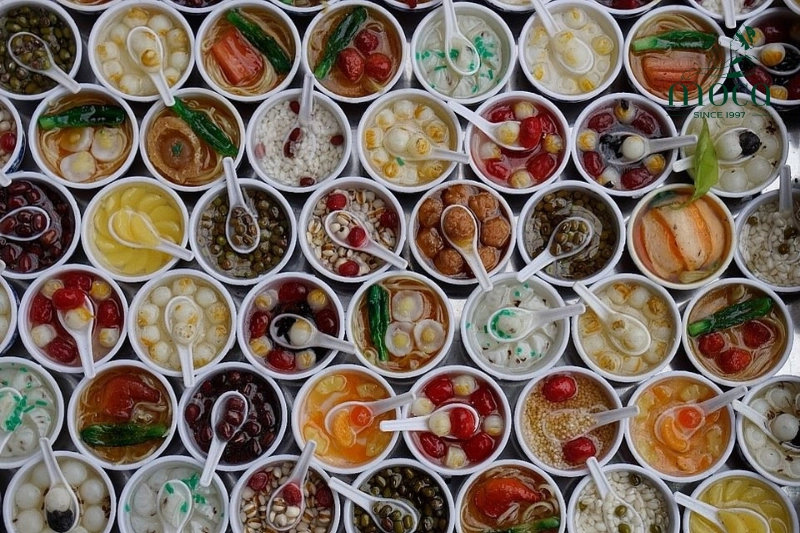
Chè – Vietnam’s quintessential dessert, celebrating regional richness and cultural diversity.
Chè is perhaps the most iconic category of sweets in Vietnam. It is not a single dish but a vast and diverse family of sweet beverages, soups, or puddings, served either hot or cold. The beauty of Vietnamese sweet soup lies in its regional diversity.
- Northern Vietnam: Here, Chè is often simpler and more rustic. A classic example is Chè Kho, a dry, thick pudding made from peeled mung beans, sugar, and a hint of vanilla, slowly stirred until it forms a dense, fragrant paste. It represents a comforting, hearty sweetness suited to cooler climates.
- Central Vietnam: The former imperial capital of Huế is known for more refined and intricate desserts. Chè Bắp (sweet corn pudding), for instance, uses a specific variety of young corn from the region's alluvial plains, creating a naturally sweet, creamy, and delicate pudding that is both simple and elegant.
- Southern Vietnam: The South, with its abundant coconut groves and fruit orchards, offers the most vibrant and complex Chè. Chè Ba Màu (three-color dessert) is a perfect example, a visually striking glass layered with red beans, yellow mung bean paste, and green pandan jelly, all drenched in rich coconut milk and crushed ice—a true celebration of texture and tropical flavor.
1.2. Bánh: The art of Vietnamese cakes and pastries
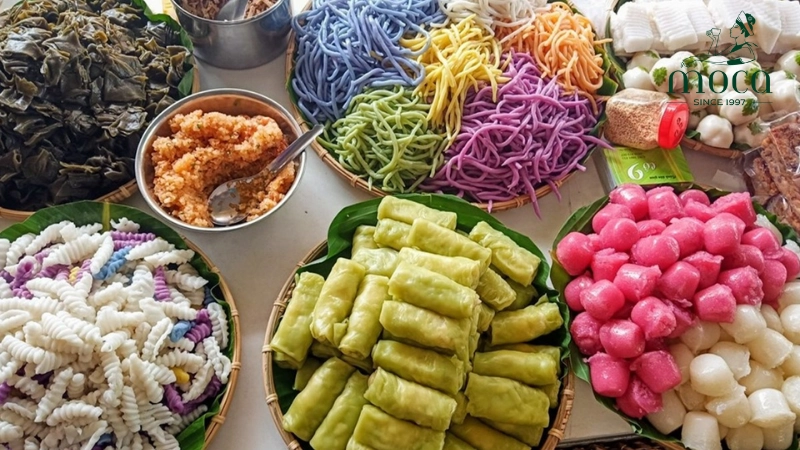
Bánh – the Vietnamese art of texture, where chewiness, softness, and subtle flavor shine.
The term Bánh encompasses a wide array of cakes, pastries, and dumplings. In the context of desserts, these Vietnamese pastries predominantly feature glutinous rice flour, tapioca starch, and coconut milk, creating wonderfully chewy, soft, and gelatinous textures.
- Bánh Da Lợn (Layered Cake): Its name translates to "pig skin cake" due to its smooth, layered appearance. Made from tapioca starch, rice flour, mung bean paste, and coconut milk, with pandan leaf extract providing a vibrant green color and aroma, this steamed cake is a masterclass in texture—soft, chewy, and subtly fragrant.
- Bánh Flan (Vietnamese Crème Caramel): While showing French influence, the Vietnamese version of crème caramel has its own distinct character. It is often made with a higher ratio of egg yolks and enriched with coconut milk, resulting in a richer, creamier custard than its European counterpart, all crowned with a dark, intensely bitter caramel.
1.3. Tropical fruit delights
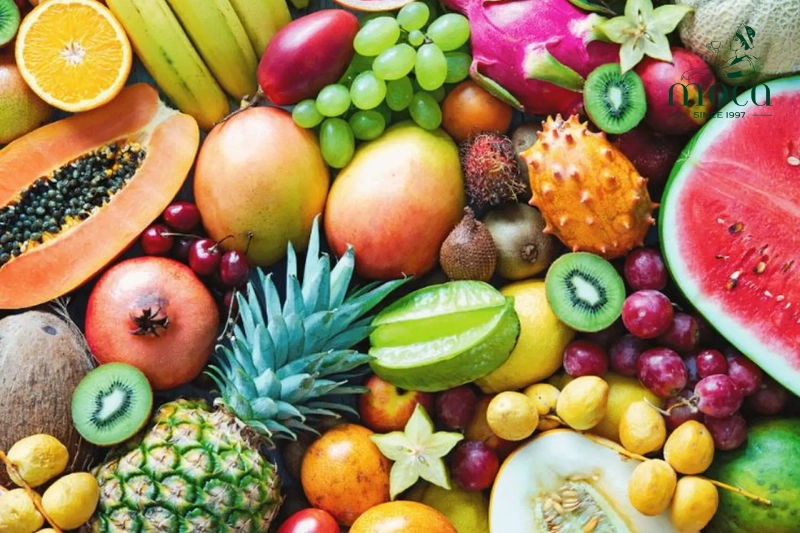
Tropical fruit’s natural sweetness – Vietnam’s purest expression of dessert.
The simplest and often most profound dessert Vietnam are the seasonal tropical fruits themselves. The philosophy is to honor the perfect, natural sweetness of a sun-ripened mango, the floral notes of a fresh lychee, or the vibrant color of dragon fruit. They are often served simply sliced or in a light syrup, a pure expression of Vietnam's fertile terroir.
2. The Fine dining evolution: Reimagining Vietnamese desserts
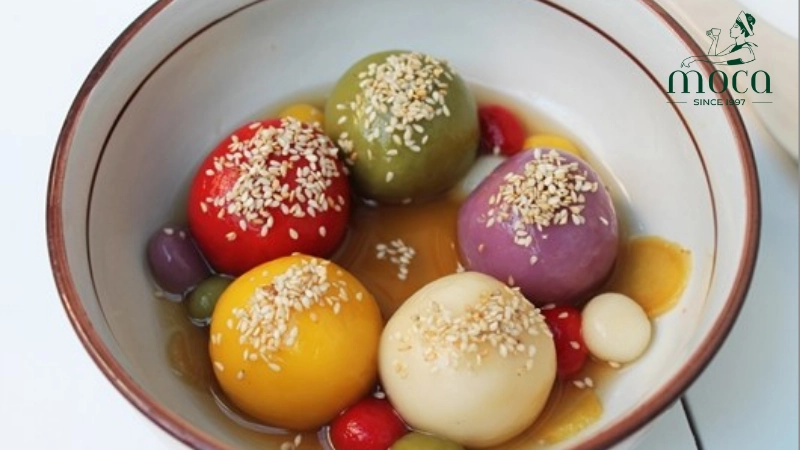
A reimagined Chè Trôi Nước – tradition transformed through modern culinary precision.
The modern fine dining scene is where these traditions are being re-examined and elevated, transforming a famous dessert Vietnam from a nostalgic treat into a work of culinary art.
At Moca Dining, our dessert philosophy is rooted in a deep respect for heritage, meticulously elevated through modern French techniques and artistic presentation. We deconstruct the familiar to create something new, yet emotionally resonant.
A signature example is our "Coconut & Pandan Sphere with Mung Bean Espuma." This dessert is a contemporary reinterpretation of Chè Trôi Nước.
- The Inspiration: The traditional dessert features a glutinous rice ball with a mung bean filling, served in a ginger and coconut milk broth.
- The Modern Technique: We encapsulate a delicate pandan-infused coconut cream within a fragile sphere using the principles of spherification. This sphere rests on a bed of light, airy mung bean "espuma" (foam) created with a siphon. It is finished with a drizzle of warm, spiced ginger syrup and a shard of black sesame tuile for texture. The experience is a surprising burst of familiar flavors presented in an entirely new form, a hallmark of modern Vietnamese desserts.
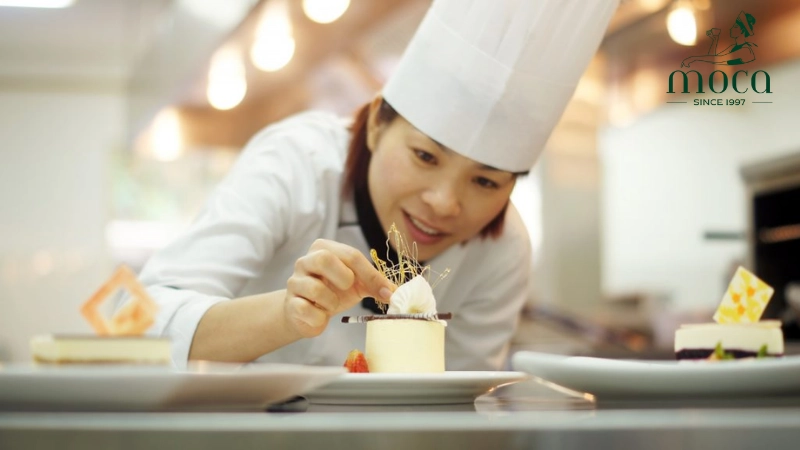
From local provenance to molecular precision — each dessert is where heritage meets science.
Our commitment begins with sourcing. We partner with local artisans to procure ingredients of unparalleled quality, such as single-origin cocoa beans from Dak Lak or organic vanilla from specific highland farms. This dedication to provenance is the soul of our creations.
This artistry is supported by science. Our pastry chefs employ principles of molecular gastronomy not for novelty, but for precision. Techniques are used to control the viscosity of a fruit gel, achieve the perfect crystallization in a sorbet, or create a stable foam that delivers flavor without weight. This scientific approach ensures that every component on the plate is executed with flawless consistency, achieving a texture and flavor profile that traditional methods cannot replicate.
3. Pairing and presentation: The complete dessert experience
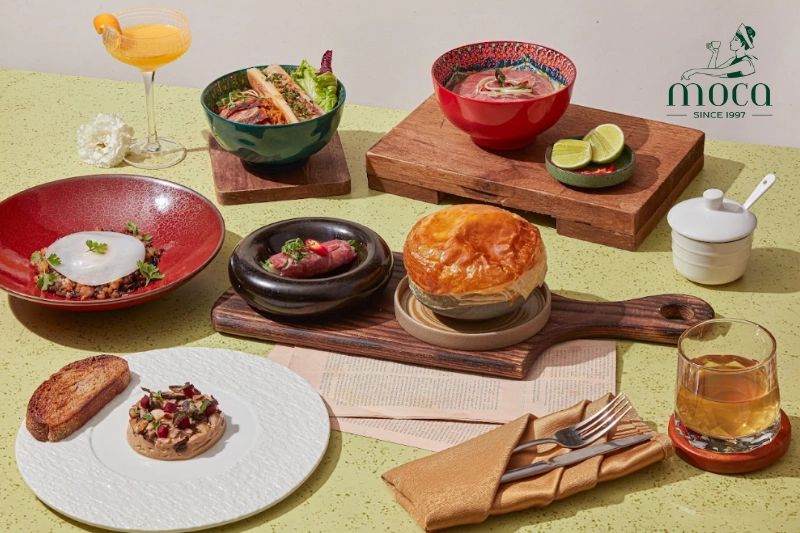
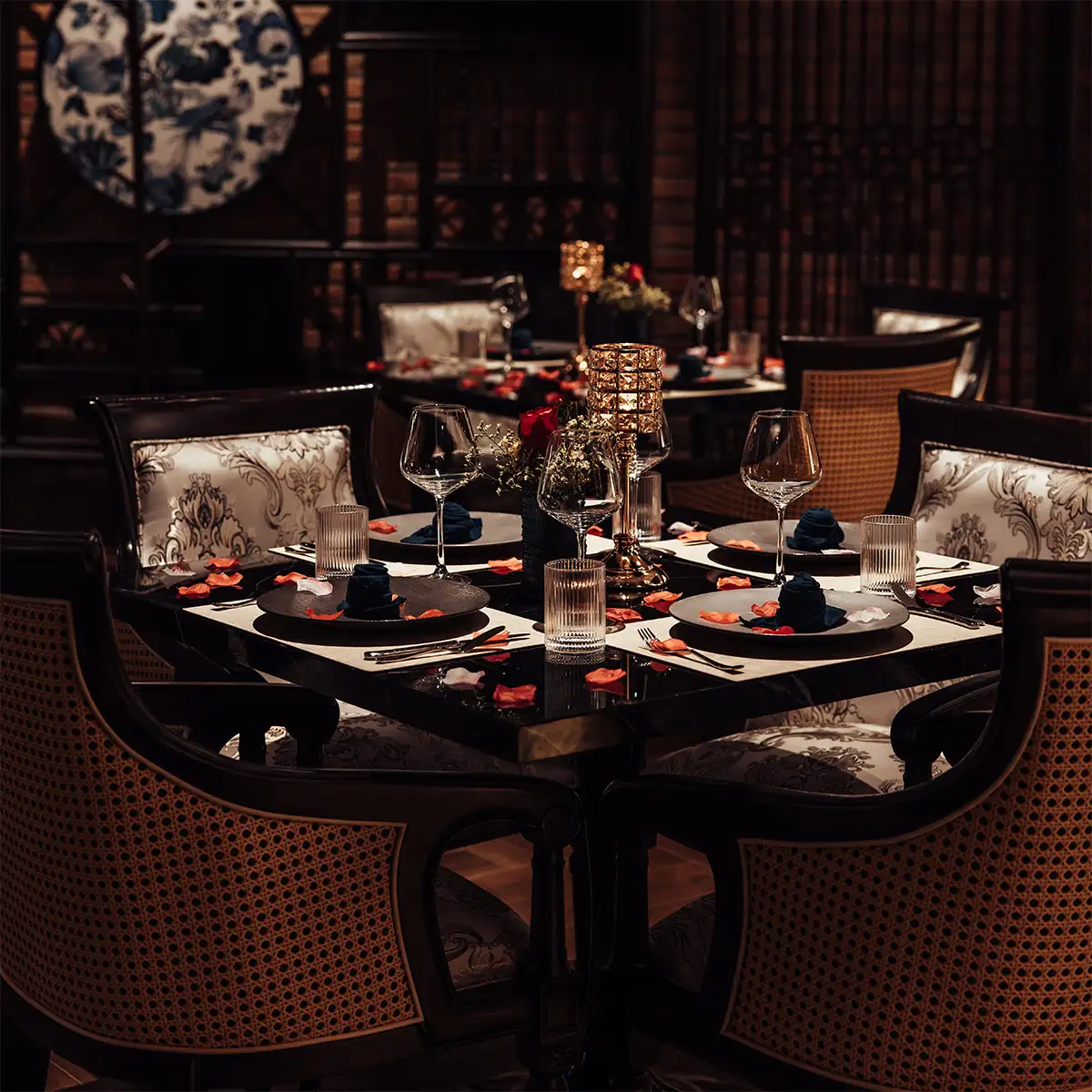
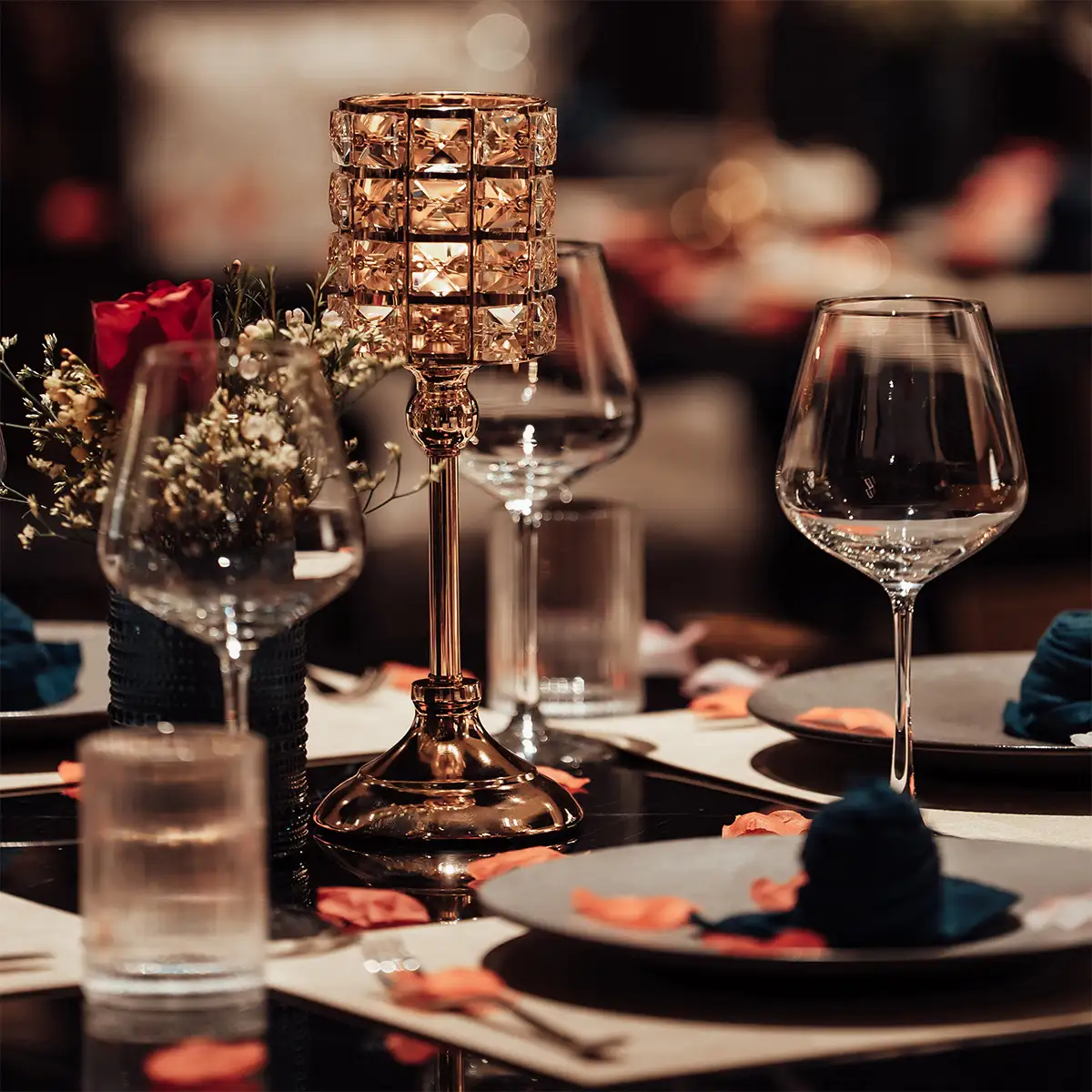
When dessert becomes visual art – perfectly paired with wine to conclude a refined dining journey.
In fine dining, the dessert is the final act, and its delivery is as important as its flavor.
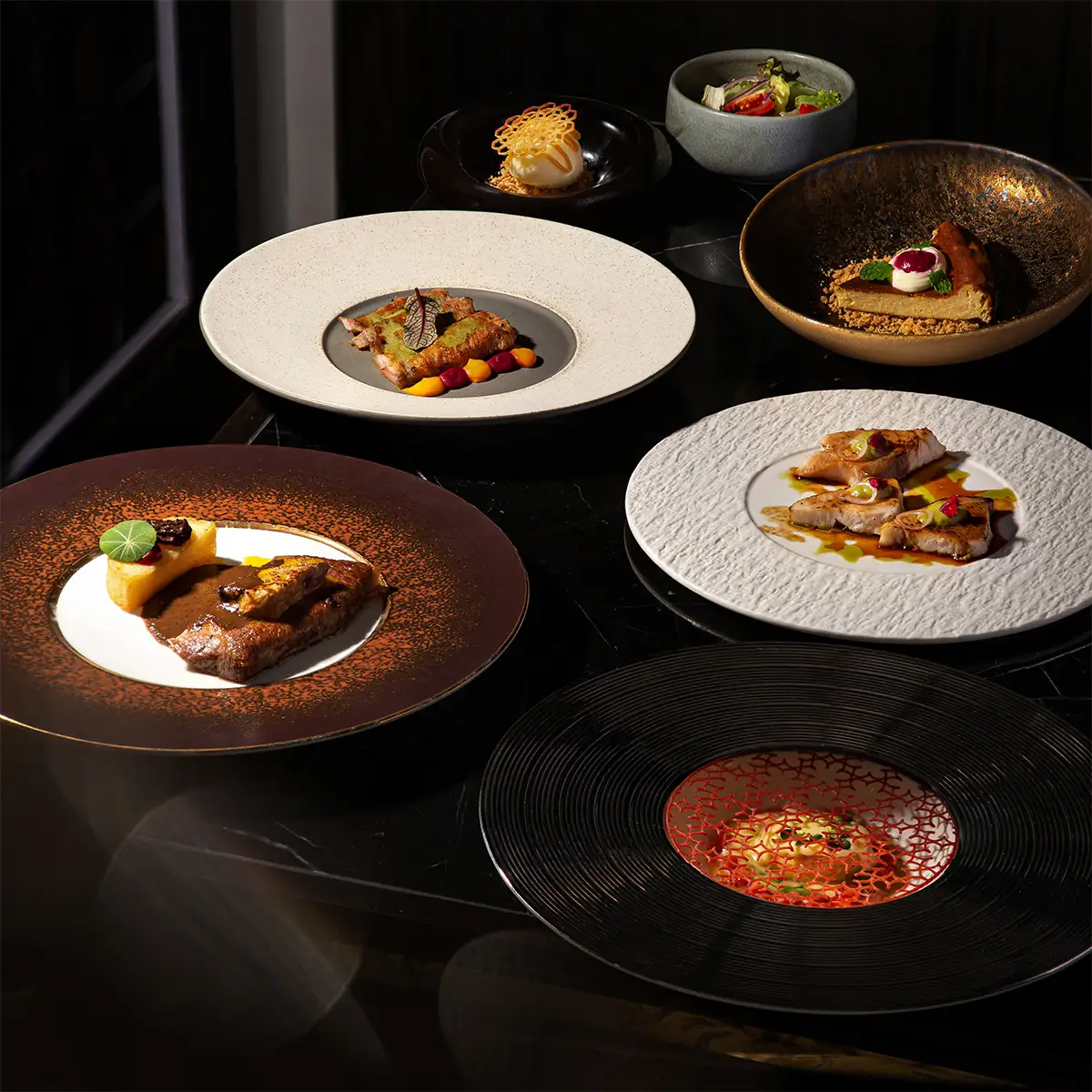
- The art of plating: We move beyond the rustic bowl to the canvas of the plate. At Moca Dining, plating is an architectural endeavor. We consider color, negative space, and structure to create a visual narrative that complements the dessert's flavor profile. The result is a multi-sensory experience that engages the eyes before delighting the palate.
- Dessert wine and beverage pairings: A thoughtfully chosen beverage pairing can elevate the dessert experience to its highest potential. Our sommeliers work closely with our pastry chefs to create harmonious pairings. The strategy is to find a beverage that either complements or provides a pleasing contrast to the dessert's sweetness, acidity, and texture.
The trajectory of dessert Vietnam is a compelling story of evolution, a journey from comforting street-side fare to sophisticated culinary art. Fine dining establishments like Moca Dining play a crucial role in this narrative, providing a stage where the full potential and elegance of Vietnam's sweet heritage can be showcased to the world. We are not replacing tradition, but honoring it through innovation. We invite you to conclude your culinary journey through Hanoi with us. Reserve your table at Moca Dining to experience how we are defining the future of sweets in Vietnam, and discover a dessert menu that is as memorable and profound as the main course.